410 below: Imagining a Luxury Campaign in Wadi Mujib
Campaigns Nobody Commissioned 002
A canyon hundreds of metres below sea level, a river that never stops moving, and a single red gown. RABWA imagines the campaign nobody commissioned, and asks why nobody did.
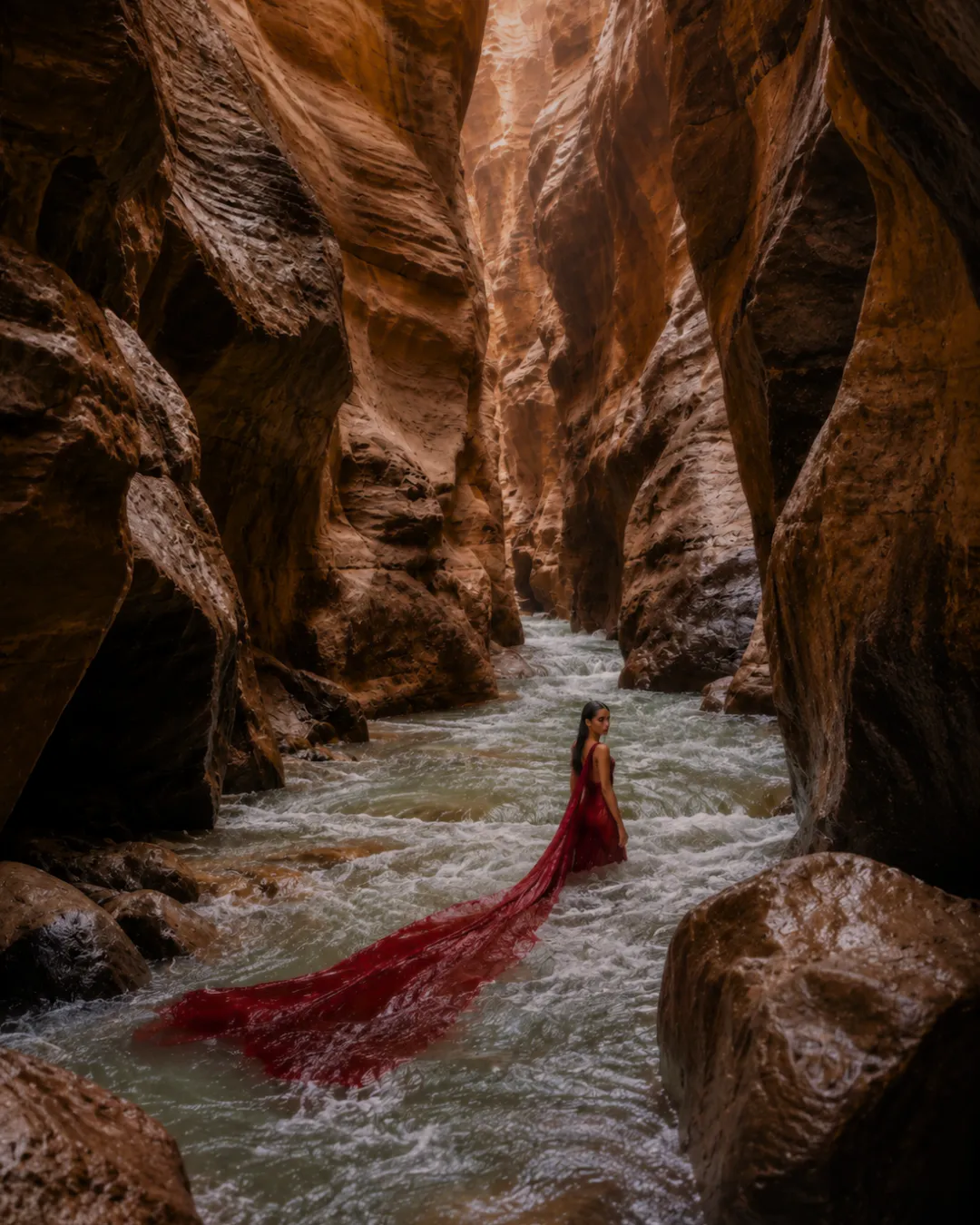
Campaigns Nobody Commissioned is a RABWA series. We take a Jordanian location that has never been the subject of a fashion campaign and build the campaign it deserves, then explain why it matters. All imagery in this series is AI-generated concept work. None of it was shot on location.
The place
Wadi Mujib runs through the mountains east of the Dead Sea, meeting it 410 metres below sea level. Part of it is protected as the Mujib Biosphere Reserve, often described as the lowest nature reserve on Earth. Its high stone walls shift between shades of red, orange, brown and soft pink. Cold, fast-moving water flows through it throughout the year. At its narrowest points, the walls move so close together that only a small glimpse of sky can be seen above.
Most people know Wadi Mujib as an adventure destination - a place where visitors walk through water, swim, climb and inevitably get soaked. It regularly appears in travel guides and holiday photographs. But it has rarely been presented as an image in its own right: a setting with a visual identity powerful enough to define an entire campaign.
410 BELOW sees Wadi Mujib differently.
Why red
We started with one rule: nothing should compete with the stone.
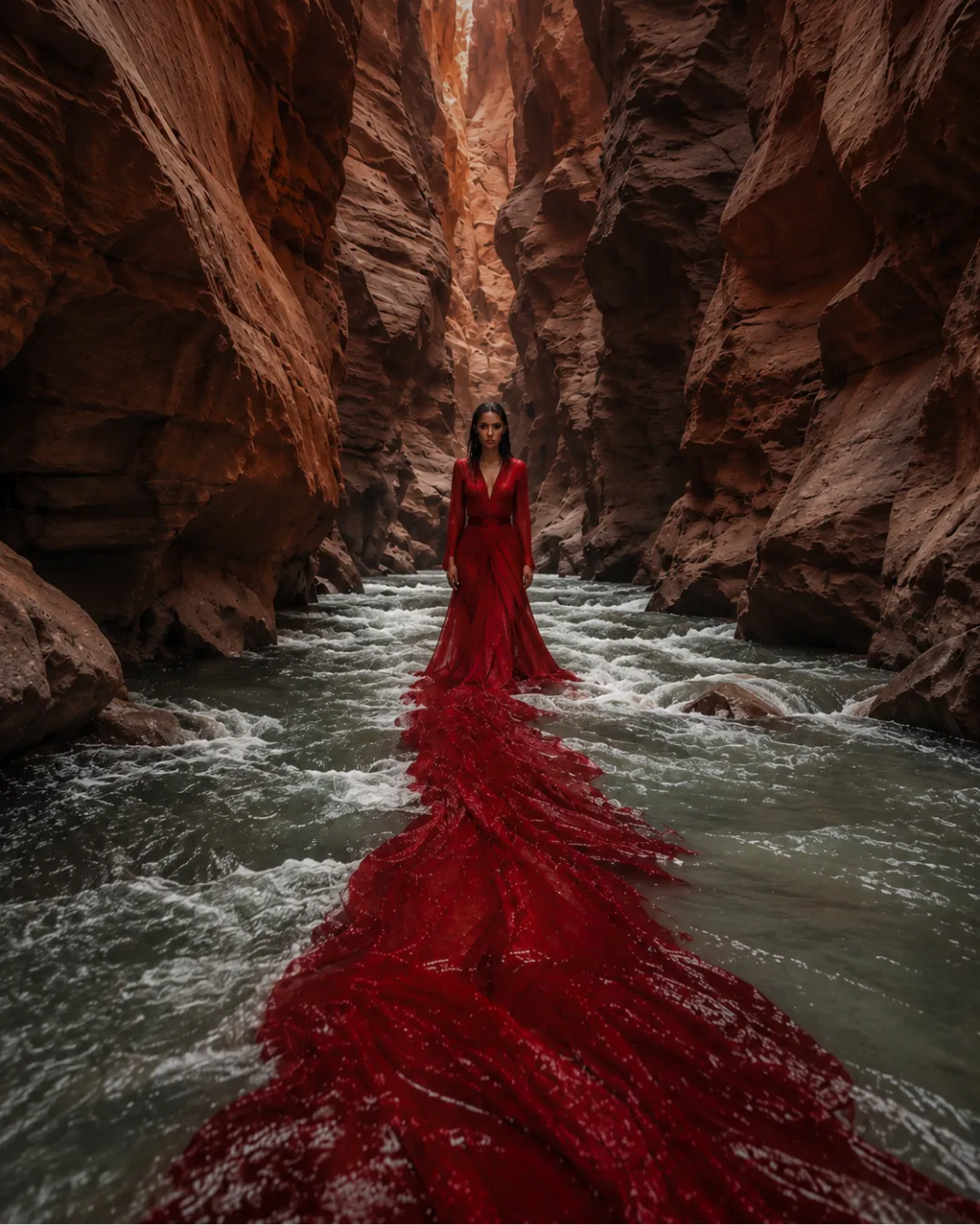
That ruled out print, pattern and styling tricks. The canyon already does the talking, so the clothing had to answer it rather than interrupt it. We chose one colour and one silhouette: a long red gown in sheer, heavy-moving fabric, with a train that the water could take hold of.
Red works here for a practical reason. The rock has warm but muted tones, while the saturated red stands clearly apart from it. Against the grey-green of the river, the colour becomes even more striking. Every frame is built around that contrast between the red, the stone and the water.
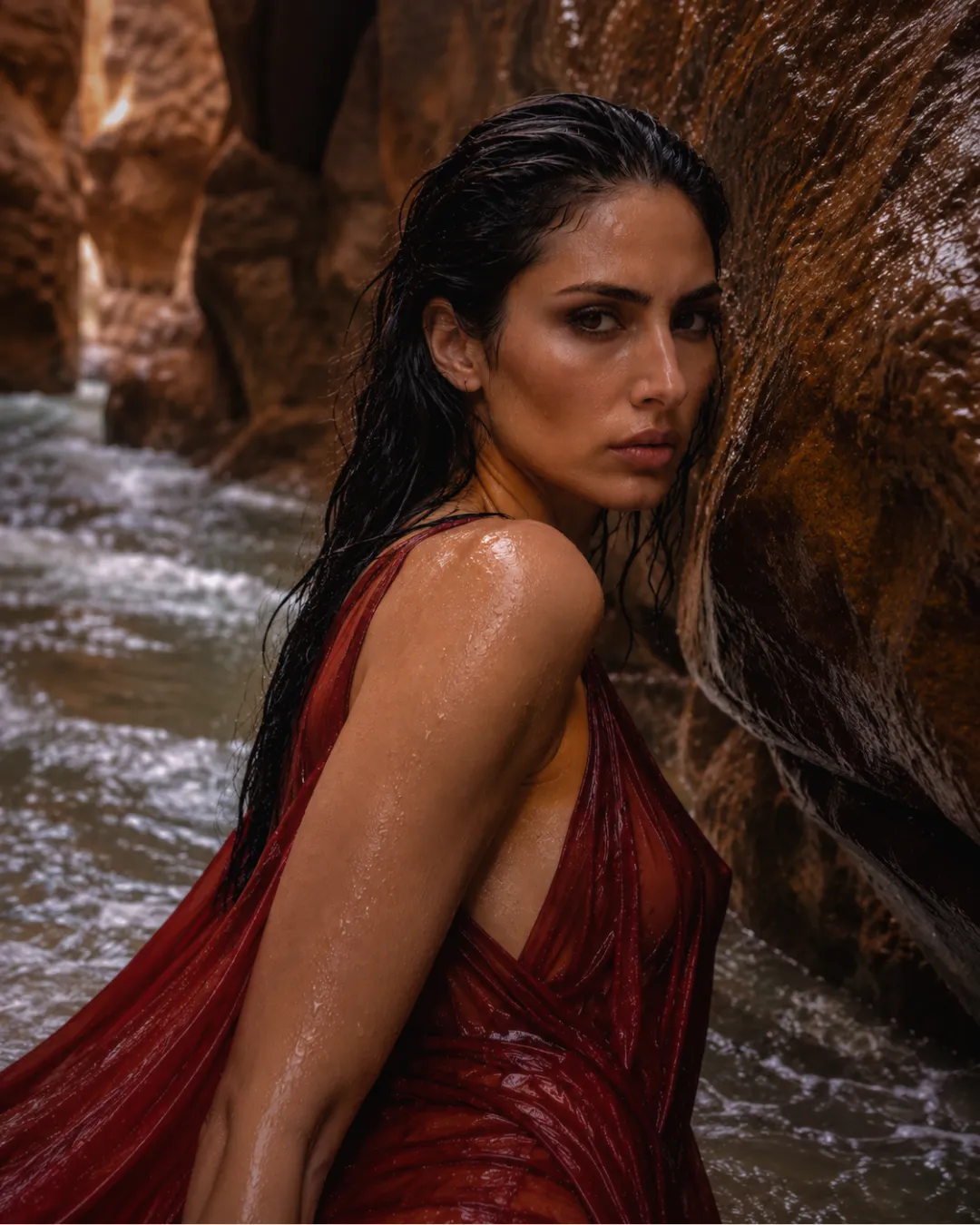
There is also a quieter reason. Water changes fabric. Dry chiffon is light and decorative. Wet chiffon clings, darkens and pulls. We wanted the gown to look as though it had been in the river for hours, as if it belonged to the place rather than being brought in for a day.
The campaign
The imagined campaign moves through the canyon in five moments.
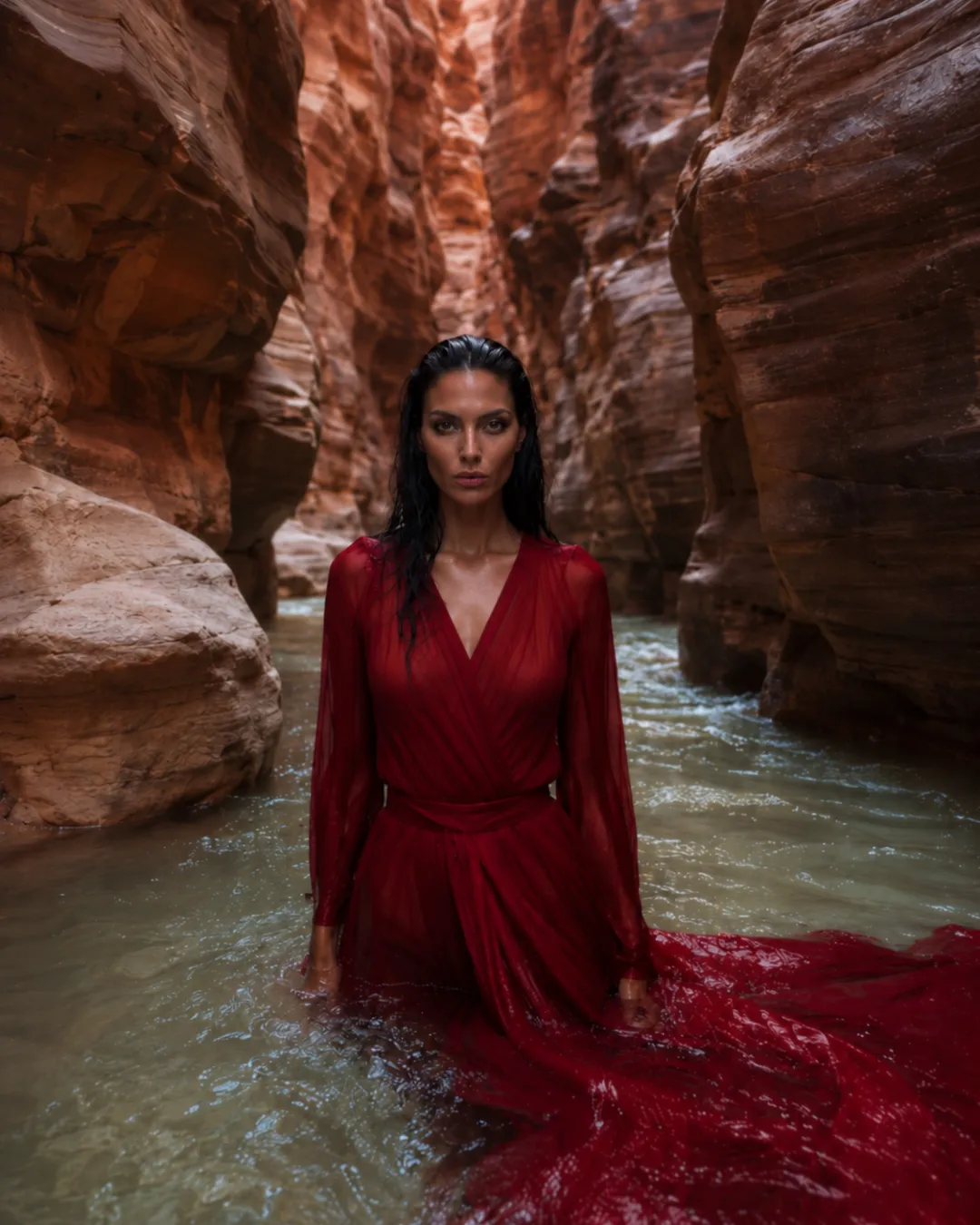
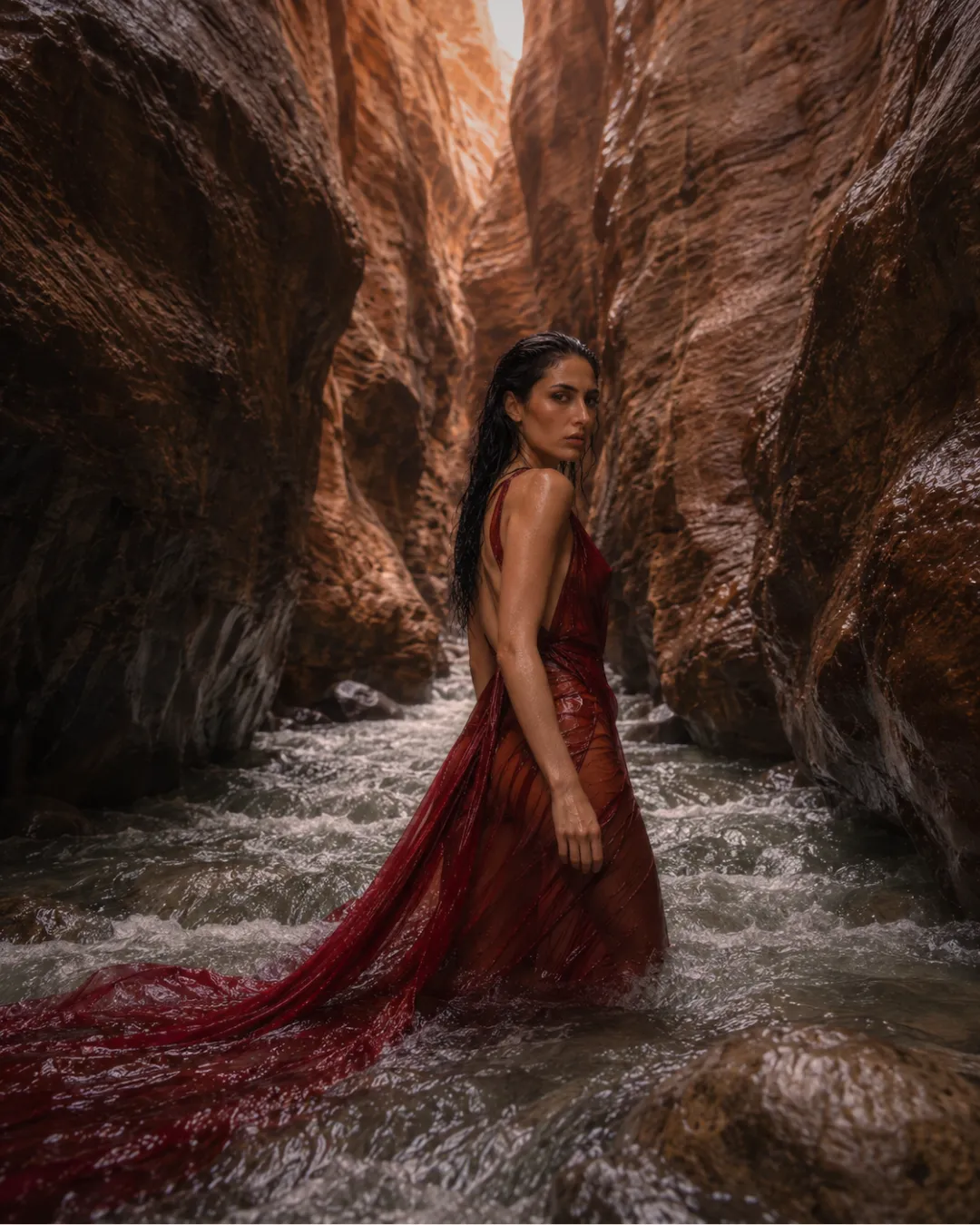
Arrival. The model stands waist-deep in the river, facing the camera, walls rising on either side. It is a direct, almost confrontational frame. This is the establishing image, the one that says this is where we are.
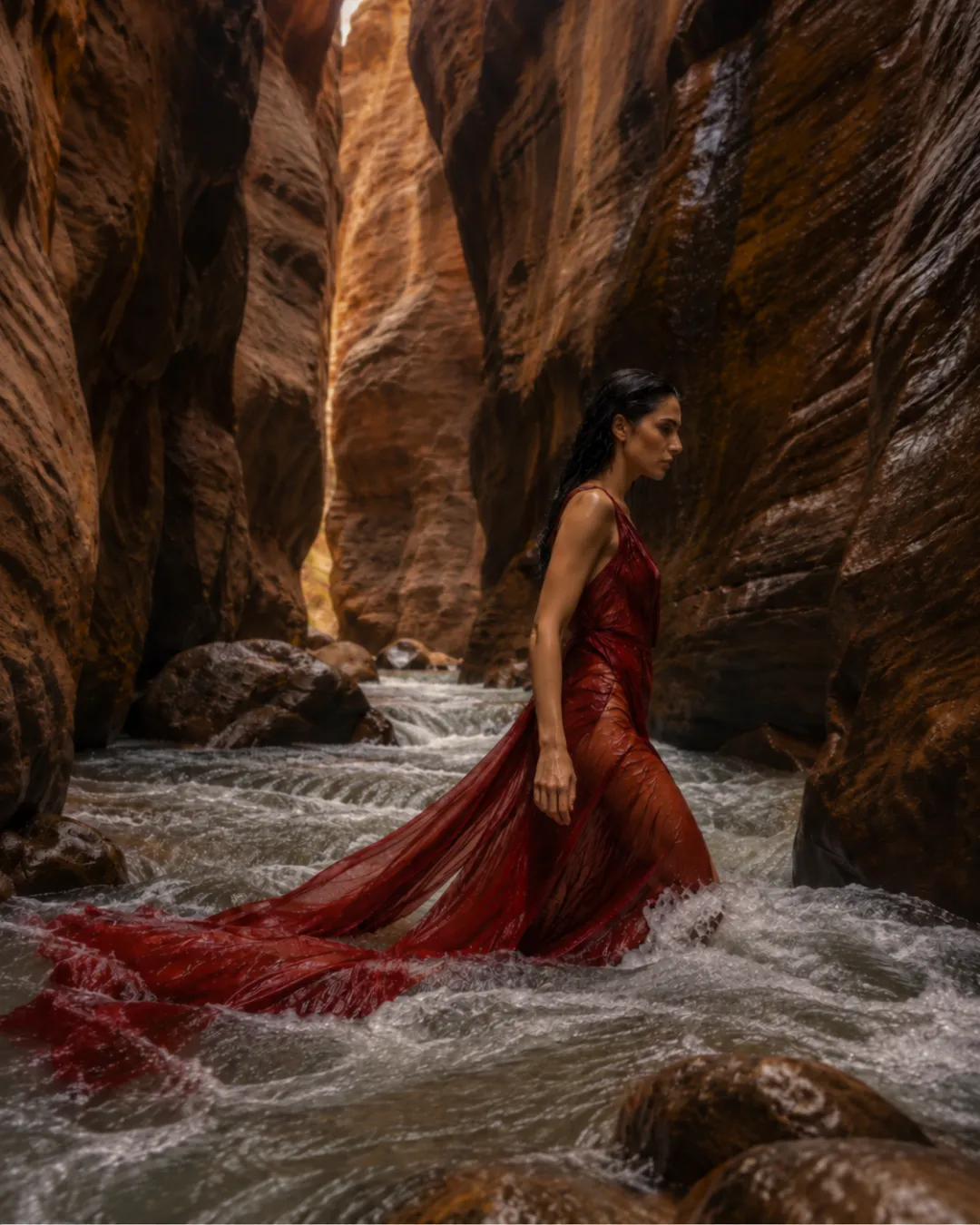
Movement. She moves through the water as the current drags the train behind her. The fabric does what no stylist could arrange: it spreads, catches and pulls back.
Close.The camera moves closer: wet hair, skin, fabric clinging to the shoulder and sandstone behind her. This is the beauty frame - the kind of image a fragrance or jewellery house would recognise.
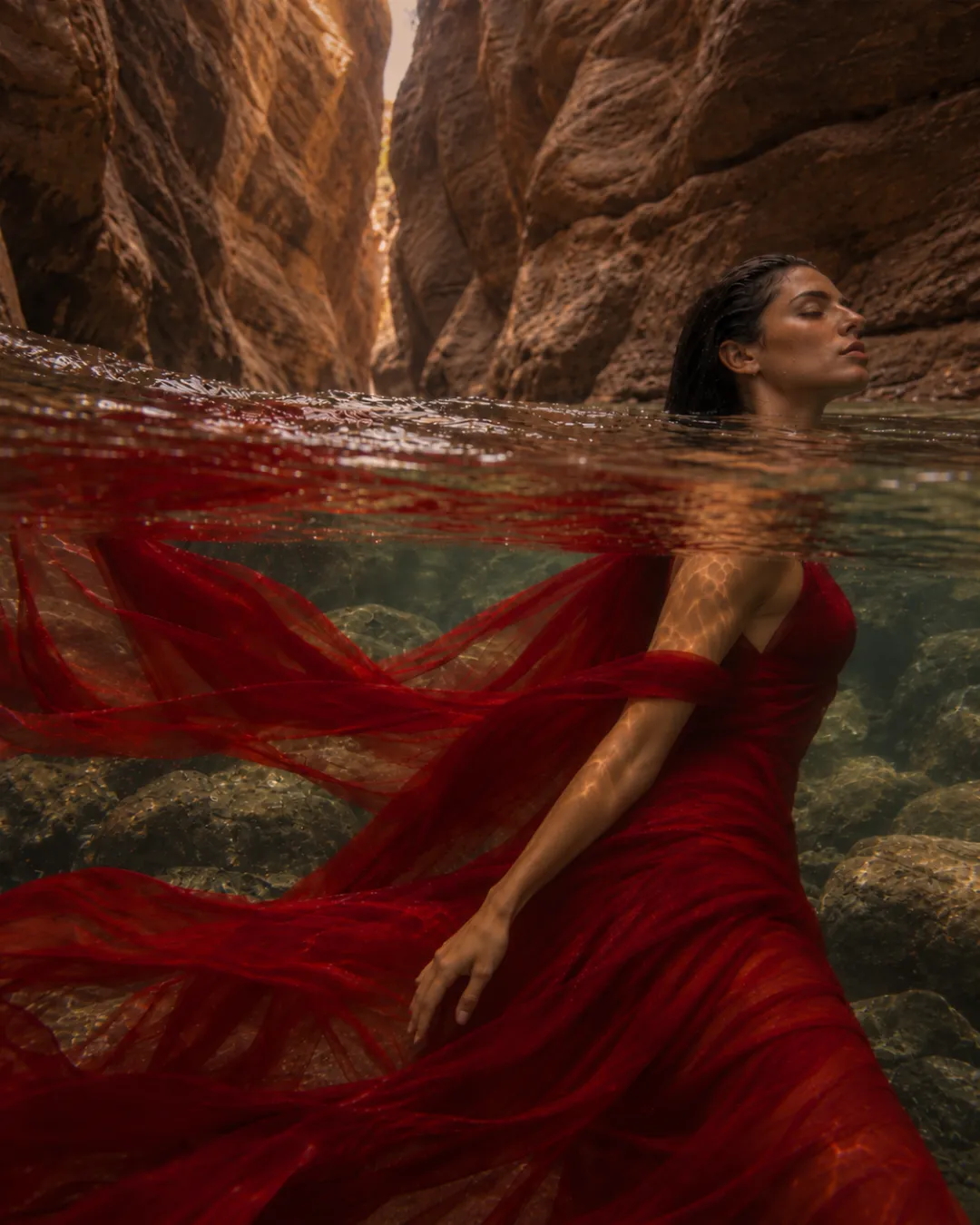
Below the surface. Half above water and half below, eyes closed, the gown moving around her with the current. It is the most surreal image in the series and reveals a quieter, more dreamlike side of the campaign.
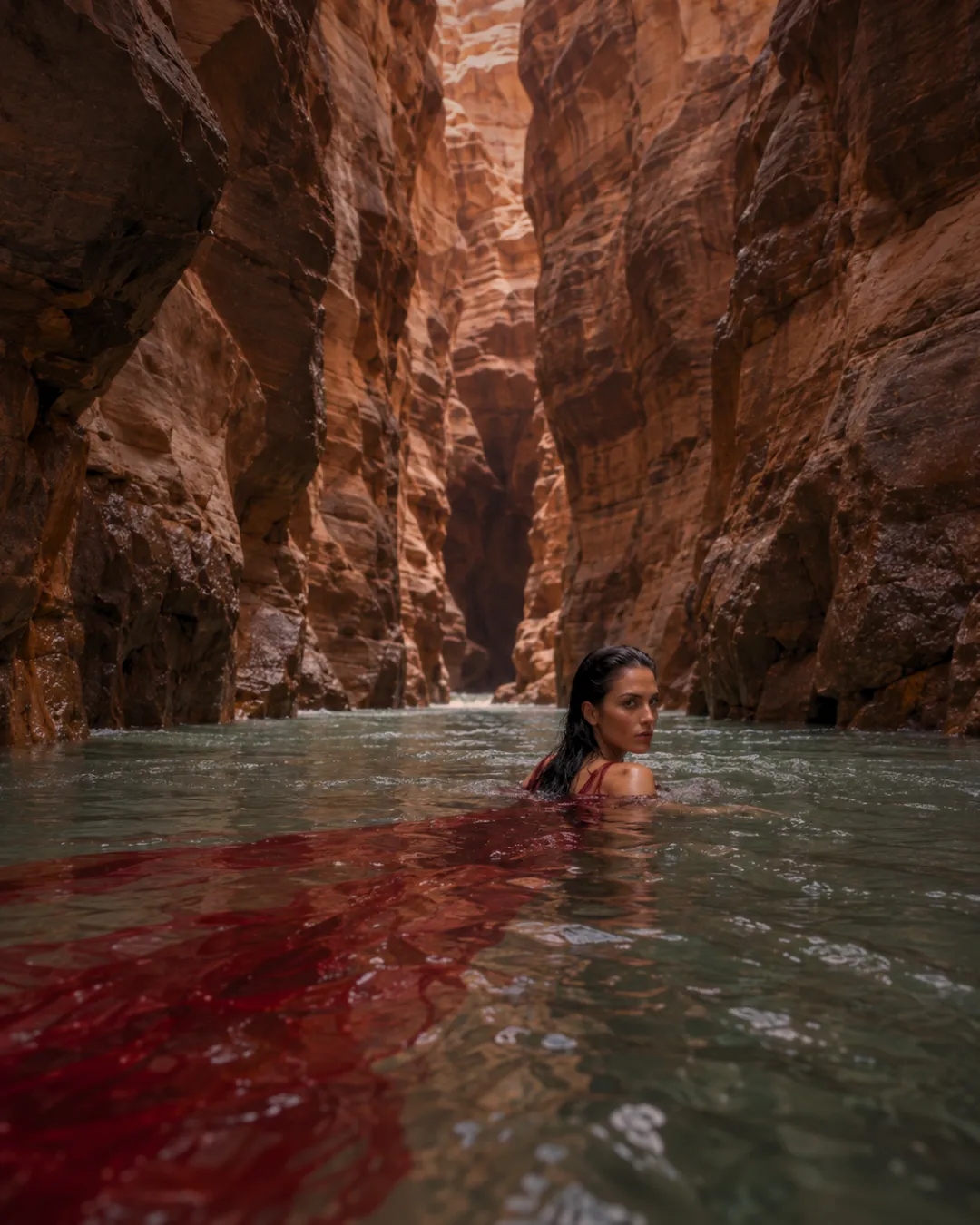
Departure. She looks back over her shoulder, then she is further away, low in a still pool, with the red spreading out around her as if the river itself has changed colour.
The argument
Luxury fashion spends a great deal of money looking for landscapes that feel untouched: salt flats, glaciers, desert canyons in other countries. Brands do this because an extraordinary location does something a studio can’t. It gives the clothes a story before anyone reads a word.
Jordan has these landscapes, and Wadi Mujib is one of the strongest. It is dramatic without being a cliché. It isn’t Petra, and it isn’t Wadi Rum. Most of the world hasn’t seen it through a fashion lens at all, and that is exactly what makes it valuable.
So the point of 410 Below isn’t the gown. The point is that Jordan’s landscapes can carry a luxury campaign on their own, and they haven’t been asked to. The problem isn’t a lack of locations. It is that nobody has pictured them this way yet, so nobody has pitched them.
That is what this series is for: to picture them first.
If it were real
A campaign like this wouldn’t be a fantasy to produce, but the canyon would set the terms. The wet trails are seasonal, usually open from spring through October, and they close when the water runs high. The reserve is protected land, so any production would need to work lightly: a small crew, no lasting marks, and respect for the place that made the images possible. The water is real and the current is strong, so safety would shape every shot.
These constraints wouldn’t be obstacles. They would give the campaign its character.