Amman after dark
Campaigns Nobody Commissioned
What happens when Amman stops being the backdrop and becomes the fashion campaign itself?
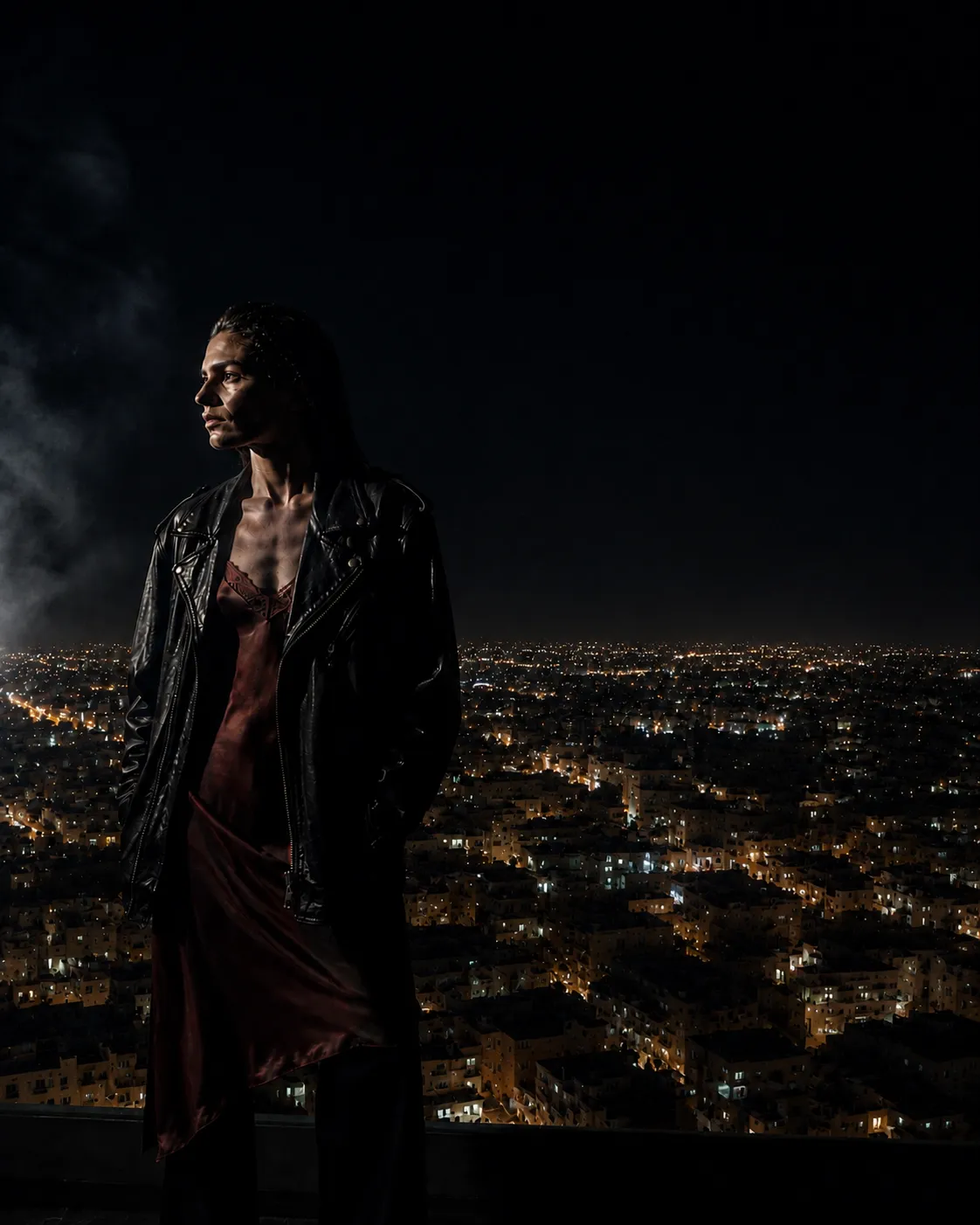
Jordanian fashion imagery has a familiar geography. When the country appears internationally, the camera often travels south: desert, rock, monumental landscapes.
Amman After Dark looks in the opposite direction.
This is the first entry in Campaigns Nobody Commissioned: a RABWA series imagining fashion campaigns for Jordanian locations that have rarely been treated as fashion locations at all. For 001, the campaign stays in the capital.
When the city changes
In daylight, Amman’s visual identity is dominated by stone. Buildings climb across the hills in variations of the same pale palette, creating the dense urban landscape the city is known for.
At night, that uniformity disappears.
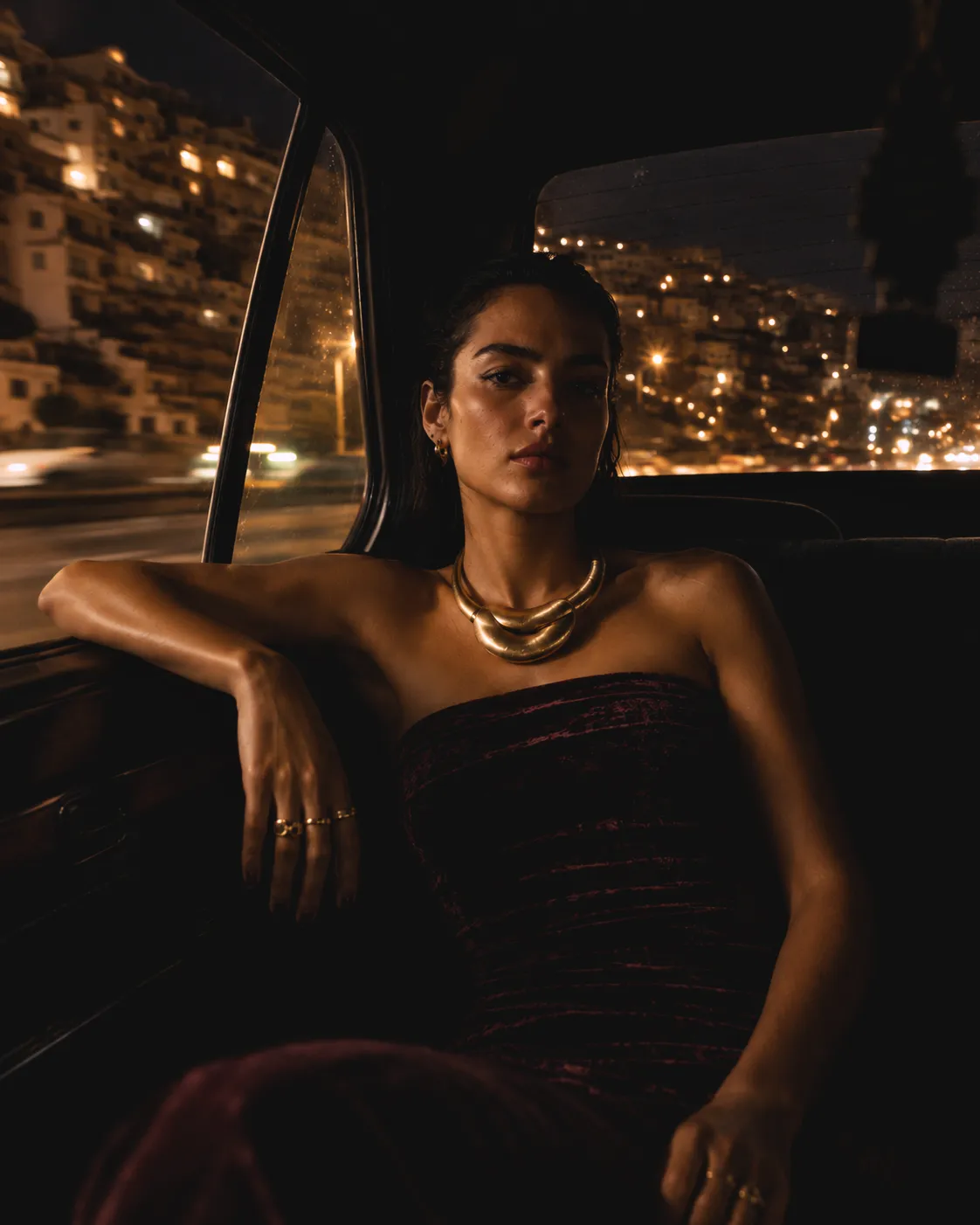
Windows light up across the hills. Glass towers begin reflecting the city around them. Bridges become strips of light. Cars, signs, street lamps and shop fronts introduce colours that are almost absent during the day.
That version of Amman is rarely the version used to represent Jordan through fashion.
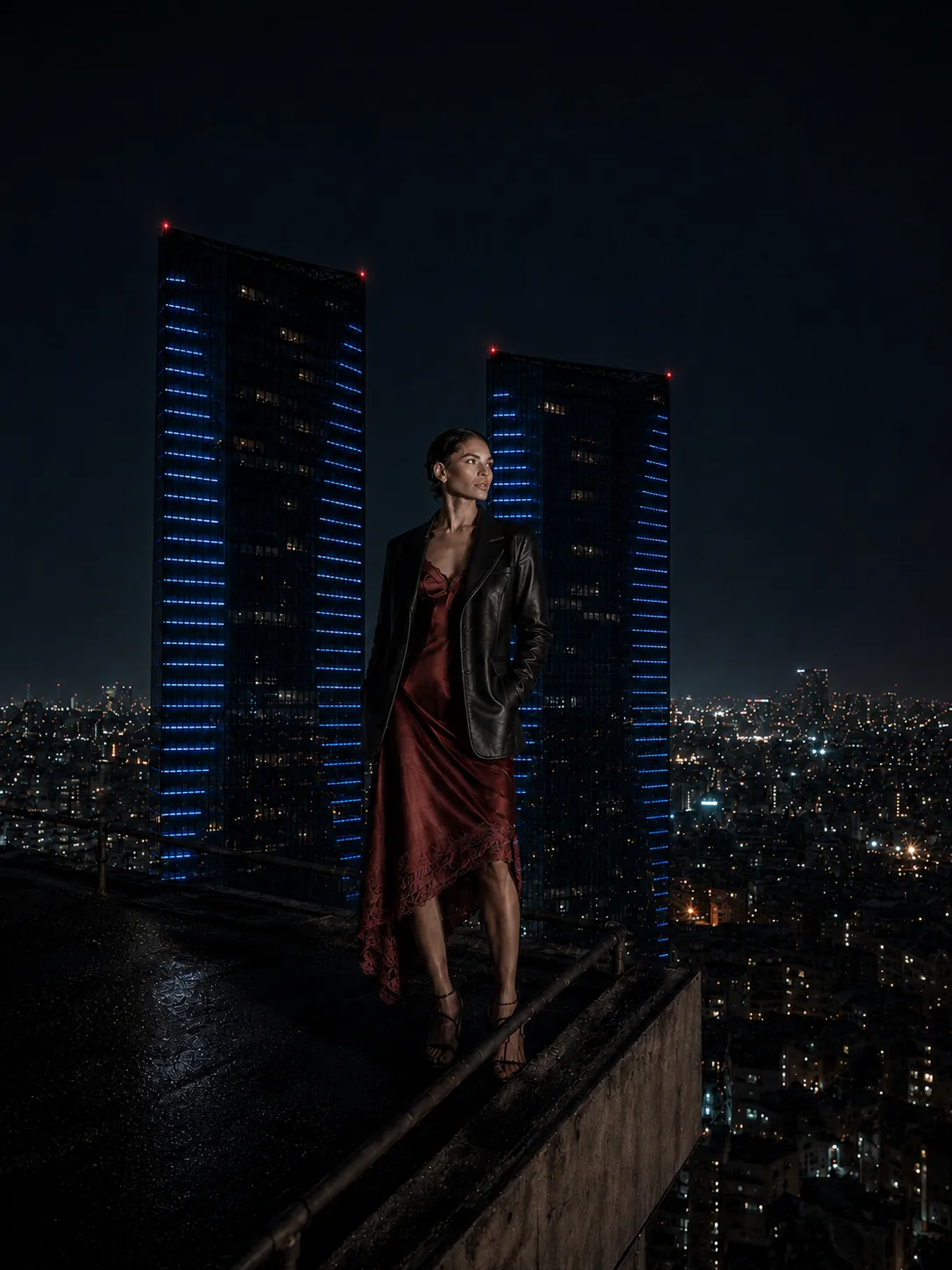
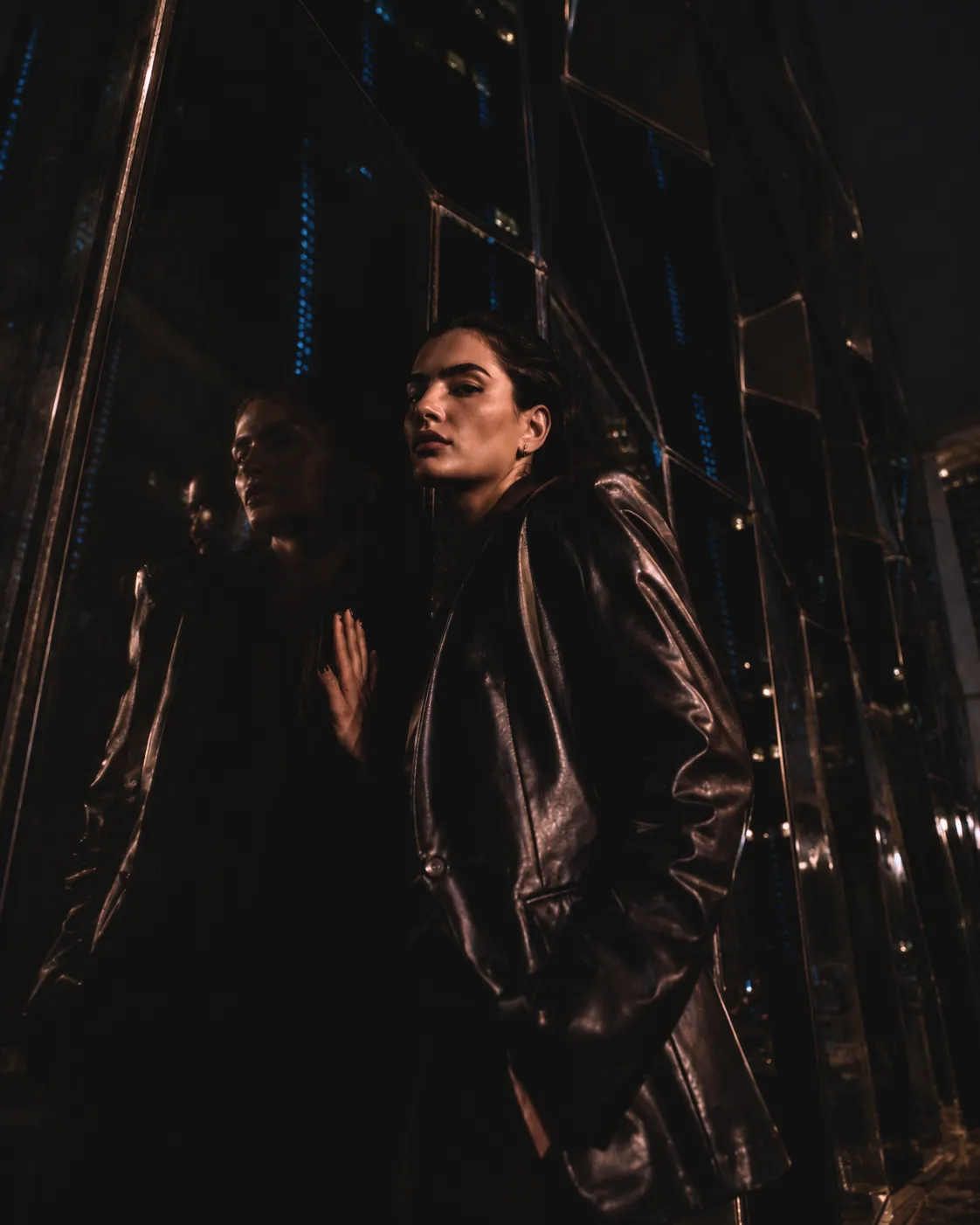
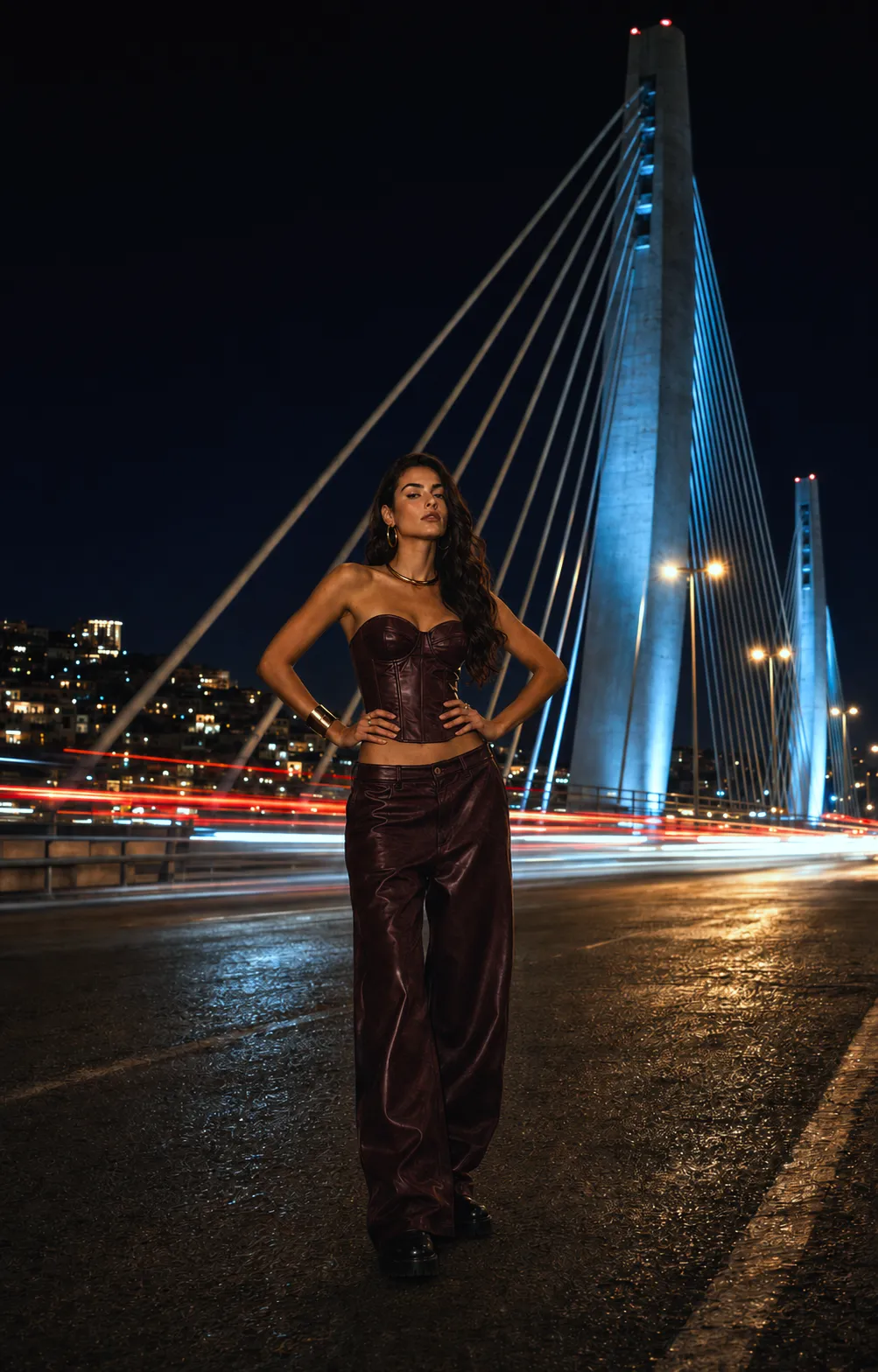
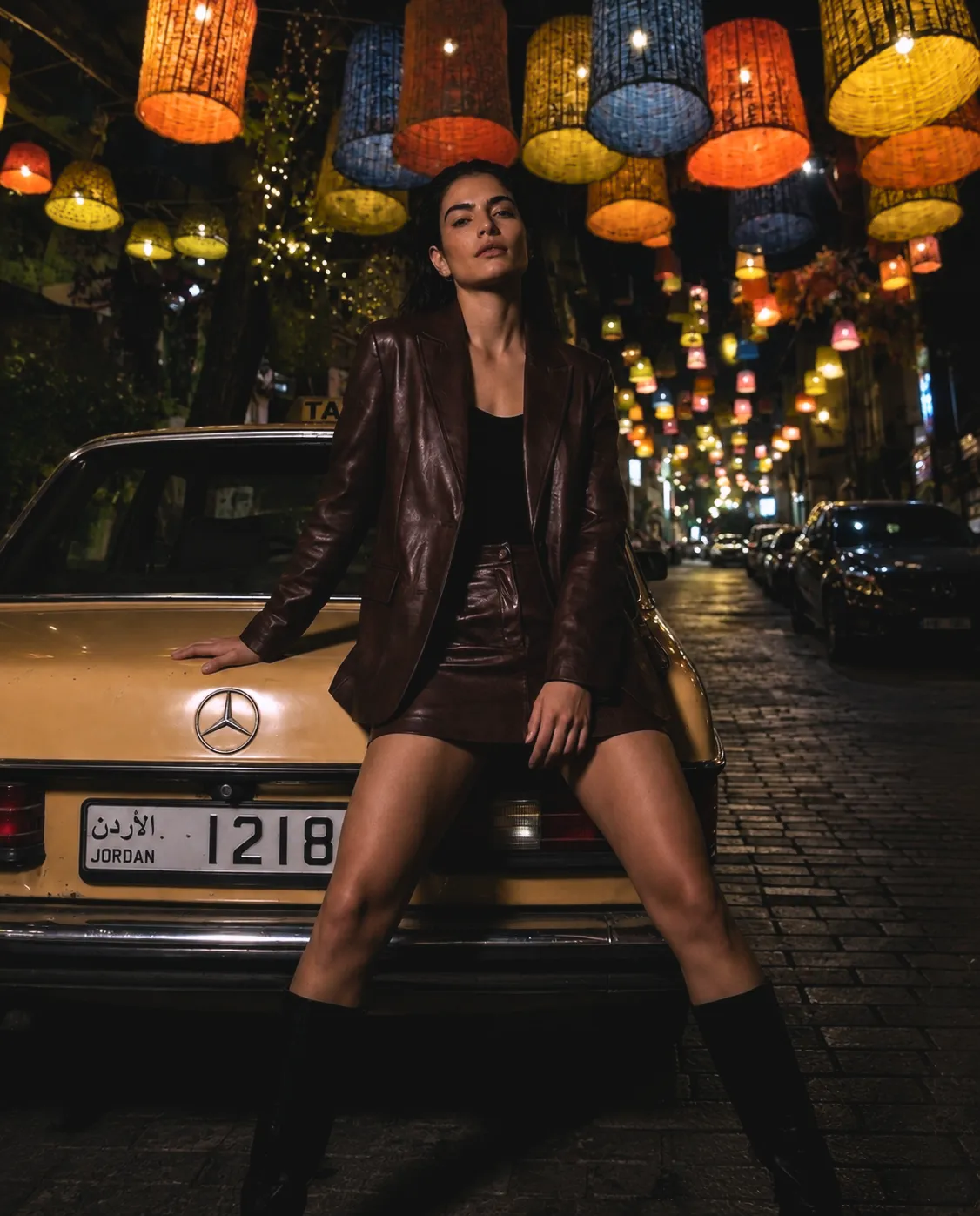
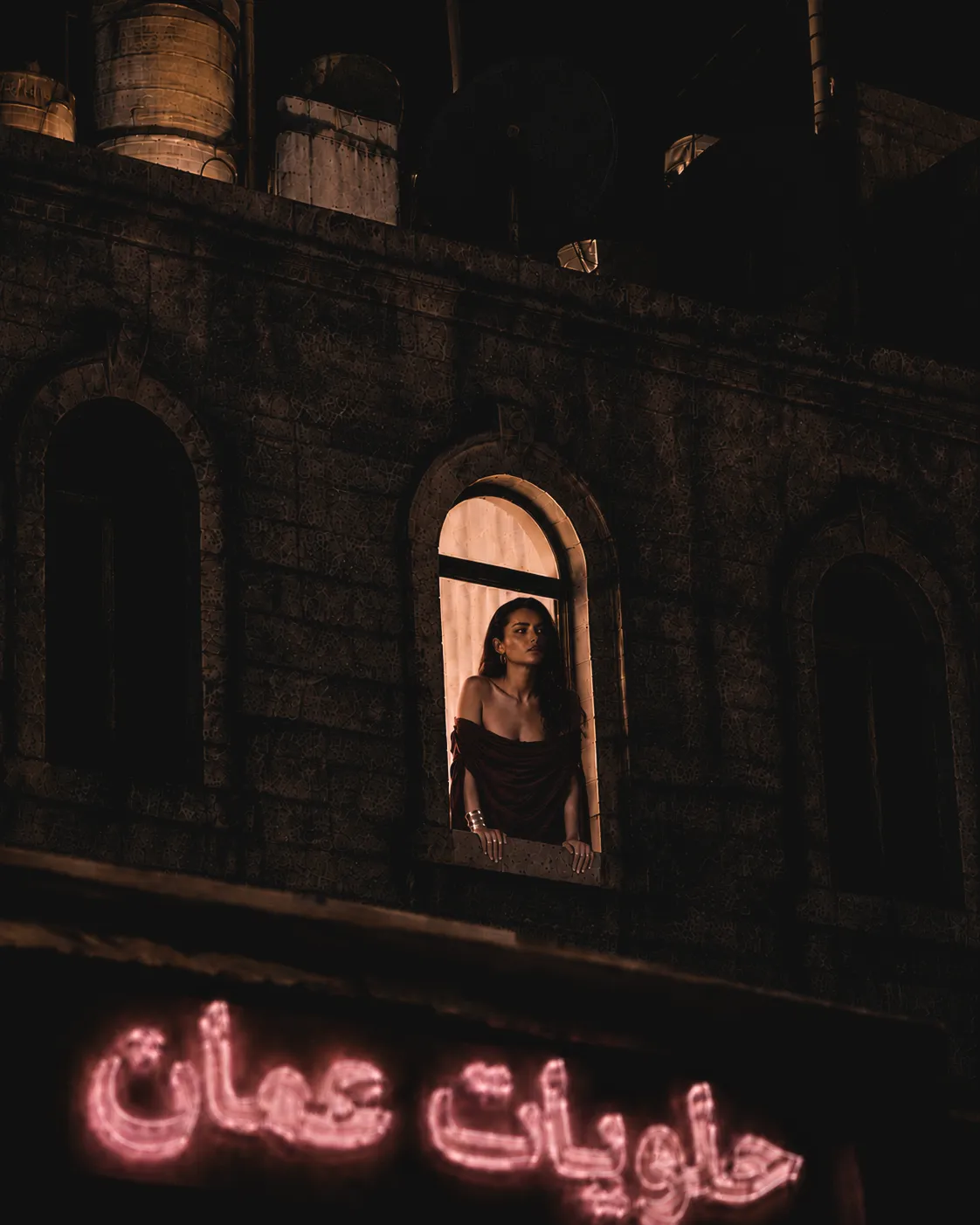
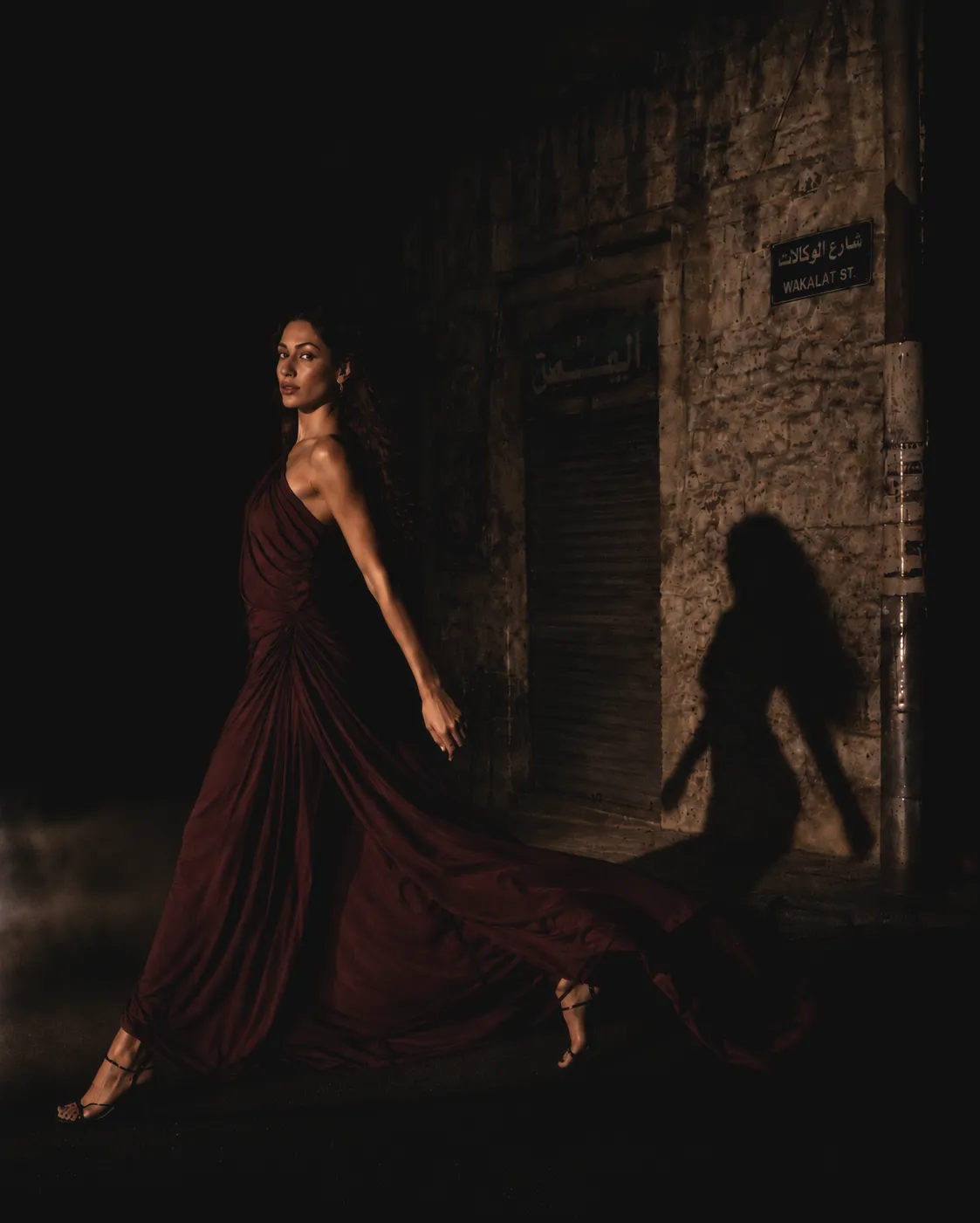
Amman’s streets already contain the visual material a campaign needs: polished new development, worn stone, neighbourhood shopfronts, traffic, taxis, neon and architecture built across different decades.
The contrast is what makes the city useful. It does not offer one perfectly controlled visual identity - and it shouldn’t. Moving through Amman means moving between those different versions of the city, sometimes within minutes.
Not just a backdrop
The idea behind the campaign was not simply to place a model in Amman and photograph her.
The city needed to be visible in the image.
The towers, roads, bridges and older streets become part of the styling. One image feels polished and metropolitan; another is darker and more intimate. Together they suggest that a single city can offer several visual identities without leaving its boundaries.
What if Amman wasn’t just the backdrop, but part of the campaign?