The campaign we nearly failed to find
Campaigns Nobody Commissioned
We spent a week designing a fashion campaign for the Hijaz Railway. Someone had already shot one there. That we didn't know is the whole story.
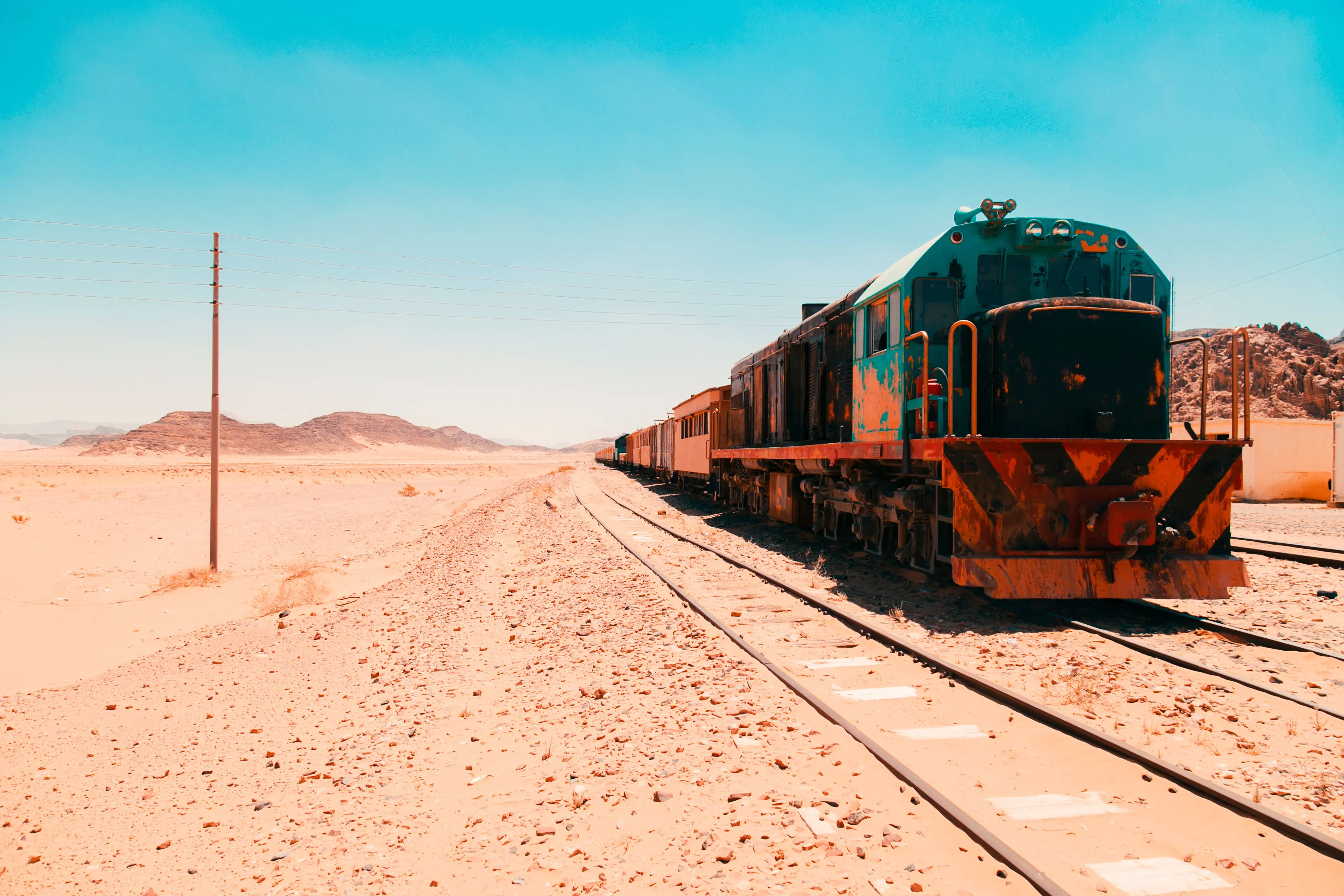
The Hijaz Railway was an obvious choice. A historic railway in the middle of Amman that still looks like a film set: green carriages, gold handrails, a platform that has barely changed. We put it on a list of Jordanian locations fashion had never touched, and started building the campaign it deserved.
That is what this series does. Take a place no brand has used, write the concept, choose the styling, describe the frames. Campaigns nobody commissioned.
We chose it. We wrote it. Then we searched properly.
Nadia Dajani had been there in January, and she had understood the place better than our concept did. A long green patterned coat with embroidered detail, worn against the dark green carriages, so the clothes and the train feel like they belong together instead of looking like an outfit placed in front of a backdrop. An Ottoman tulip reworked in embroidery, photographed against a surviving piece of Ottoman history, so the design and the setting speak to each other across a century. Photography by Lynne Khouri, styling by Jad Toghuj.
View this post on Instagram
It’s a strong campaign by any standard. It takes a heritage site and avoids the obvious version of it, which is the hardest thing to do at a location that already photographs beautifully on its own.
View this post on Instagram
And it was completely absent from anywhere we had thought to look.
The point is not that we missed it. The point is how easy it was to miss.
There is no archive of Jordanian fashion. No index, no register, no record of what has been shot, by whom, where, or when. A campaign goes up, lives on a grid for a week, and then stops being findable - not because it wasn’t good, but because nothing here is built to keep it.
The work exists. The record doesn’t.
That gap is not just about keeping records. It is the reason the same conversation repeats every year.
A designer starting out in Amman cannot see what came before her. She cannot point at a body of work and say: this is the tradition I’m arguing with. A brand deciding where to shoot cannot find out that the location has already been used, and used well. A writer abroad compiling a list of designers to watch works from the outside, from whatever surfaced in English, and gets it wrong - not on purpose, but because there is nothing to check against.
Everyone starts from zero. Every time.
This is what people mean, or should mean, when they say Jordan has a visibility problem. It is not that there isn’t enough good work. Nadia’s railway campaign is the proof that it isn’t. It is that the work is unrecorded, and unrecorded work cannot be built on, cited, sold, taught or argued with. It can only be done again.
So before the next campaign gets imagined from scratch, it’s worth asking a simpler question: what else has already been made here that none of us have seen?